


WHAT/WHEN:
The recreational harvest of gray triggerfish in the Gulf of Mexico federal waters will open 12:01 a.m., local time, on January 1, 2018, and will close at 12:01a.m., local time, on January 16, 2018. Recreational triggerfish harvest will reopen on March 1, 2018.
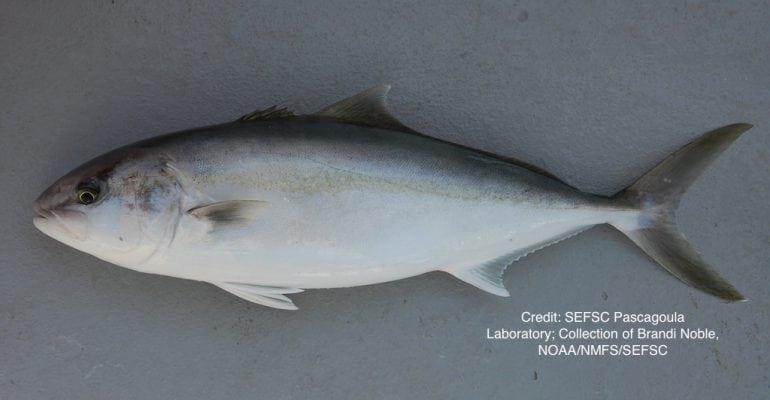
The recreational harvest of greater amberjack in the Gulf of Mexico federal waters will open 12:01a.m., local time, on January 1, 2018, and will close at 12:01 a.m., local time, on January 27, 2018. A recent rule would keep fishing closed until July 1; however, another rule is being developed that would set spring and fall seasons. NOAA Fisheries will publish a Fishery Bulletin announcing the opening dates later in 2018.
WHY THIS CLOSURE IS HAPPENING:
Gray triggerfish are currently considered overfished (population is too low). Greater amberjack are currently considered overfished and overfishing (too many fish are being removed) is occurring. The Gulf of MexicoFishery Management Council recommended these actions to rebuild the populations.
The final rule to modify the gray triggerfish rebuilding plan will be effective January 16, 2018. This final rule implements a recreational fixed closed season of January 1 through the end of February. However, because the effective date is after January 1, the season closure for 2018 cannot begin until January 16.
The final rule to modify greater amberjack allowable harvest and rebuilding plan will be effective January 27, 2018.
This final rule implements a recreational fixed closed season of January 1 through June 30. However, because the effective date is after January 1, the season closure for 2018 cannot begin until January 27. The fixed closed season is a short-term measure while a new rule is being developed to set spring and fall seasons.
DURING THE CLOSURE:
During the recreational closure, the bag and possession limits of gray triggerfish and greater amberjack, in or from federal waters, are zero.
This bulletin provides only a summary of the existing regulations. Full regulations can be found in the Federal Register or at: https://www.ecfr.gov/cgi-bin/retrieveECFRgp=&SID=e11e1299e9b90c9137302370e9173287&mc=true&n=pt50.12.622&r=PART&ty=HTML#sp50.12.622.b.
FREQUENTLY ASKED QUESTIONS
Where can I find more information?
- Gray Triggerfish
- Amendment 46 to the fishery management plan, which establishes the new management measures for gray triggerfish, may be found online at the NOAA Fisheries Southeast Regional Office Website at:
- FAQs about Amendment 46 can be found at:
http://sero.nmfs.noaa.gov/fishery_bulletins/2017/076/index.html.
- Greater Amberjack
- The framework action that modifies the greater amberjack allowable harvest and rebuilding plan may be found online at the NOAA Fisheries Southeast Regional Office Web site at:
- FAQs about the framework action can be found at:
http://sero.nmfs.noaa.gov/fishery_bulletins/2017/080/index.html.
About Gulf of Mexico Fishery Management Council
The Gulf of Mexico Fishery Management Council is one of eight regional Fishery Management Councils established by the Fishery Conservation and Management Act of 1976. The Council prepares fishery management plans, which are designed to manage fishery resources within the 200-mile limit of the Gulf of Mexico.